
Description
Overview
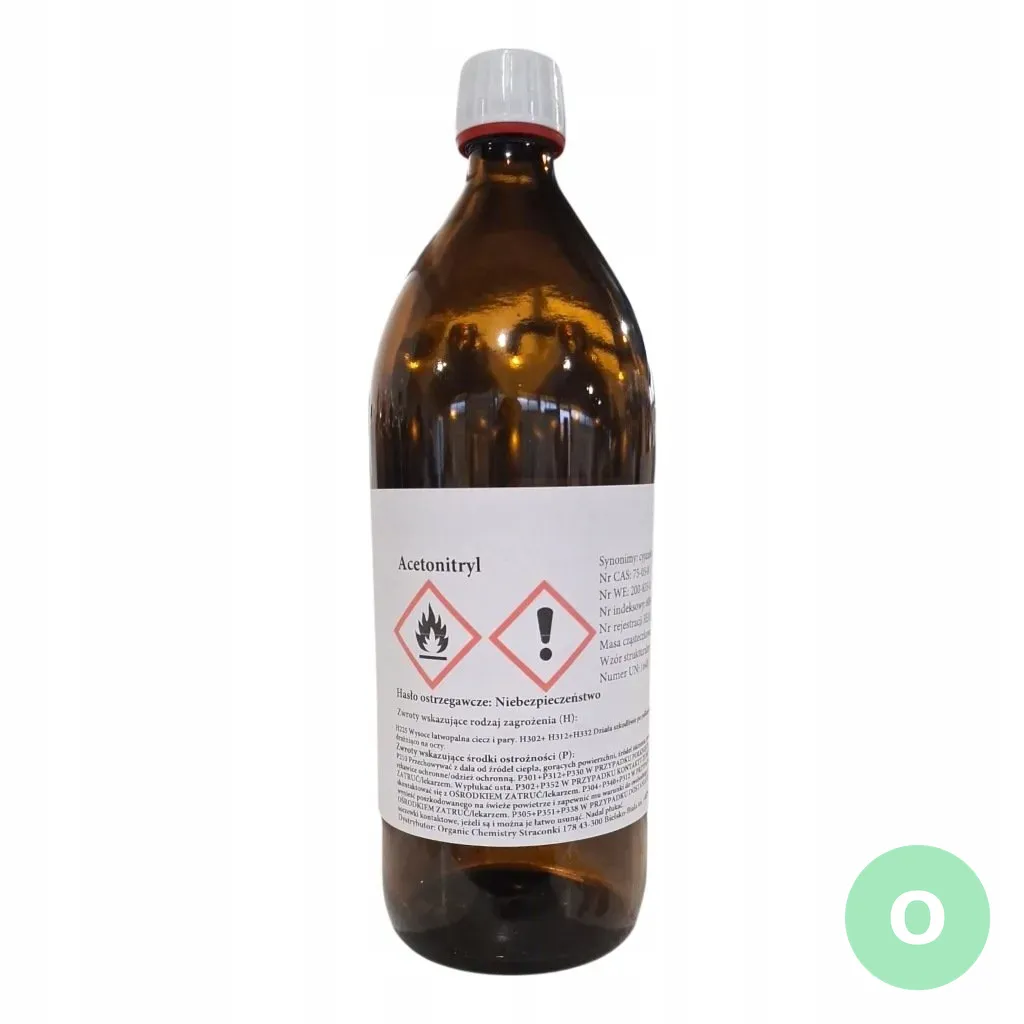
- Chemical formula: CH3CN
- CAS number: 75-05-8
- Molar mass: 41.05 g/mol
- Form: Liquid
- Purity: 99.9%
- Other names: Cyanomethane, Methyl cyanide, Ethyl nitrile
Applications
- High-Performance Liquid Chromatography (HPLC): Acetonitrile is a top mobile phase solvent. It separates compounds in drug analysis, food testing, and environmental samples. Its low UV cutoff helps detect many substances.
- Chemical Synthesis: It works as a polar aprotic solvent. It dissolves many organic and inorganic reagents. It is used in making pharmaceuticals, agrochemicals, and dyes.
- Extraction and Purification: It extracts fatty acids from oils or natural products. It also purifies peptides and proteins in biotechnology labs.
- Spectroscopy: It is a solvent for UV-Vis and NMR analysis. It does not interfere with many spectral ranges. This makes data clean and clear.
- Electrochemistry: It serves as a solvent for electrolytes in batteries and sensors. Its high dielectric constant supports ion movement. It is stable under electric fields.
Specifications
Purity: 99.9% (GC). Water content: <0.05%. UV cutoff: 190 nm. Boiling point: 81.6°C. Density: 0.786 g/mL at 20°C. Flash point: 2°C (closed cup). Storage: Keep in a cool, dry place away from heat and open flames. Store in a tightly sealed container. Use within 2 years. Volume: 1 liter.
Frequently Asked Questions
How do I use acetonitrile for HPLC sample preparation?
First, filter your sample through a 0.45 micron syringe filter. This removes particles. Then, mix acetonitrile with water or buffer in a specific ratio. Common mixes are 50:50 or 70:30. Degas the mixture by sonication for 10 minutes. This prevents air bubbles in the column. Always use HPLC-grade acetonitrile for best results. Did you know that acetonitrile is often preferred over methanol because it gives sharper peaks in many separations?
What are the key chemical properties of acetonitrile?
Acetonitrile is a polar aprotic solvent. This means it can dissolve many salts but does not donate protons. Its boiling point is 81.6°C, which is lower than water. It evaporates quickly. It is miscible with water and most organic solvents. Its dielectric constant is 37.5, which is high. This helps dissolve charged compounds. Did you know that acetonitrile has a low viscosity, which makes it ideal for fast chromatography runs?
How is acetonitrile different from methanol or ethanol for lab use?
Acetonitrile is a nitrile, not an alcohol. It has no -OH group. This makes it less reactive with acids or bases. It does not form hydrogen bonds as strongly as alcohols. This gives better separation in reverse-phase HPLC. However, acetonitrile is more toxic than ethanol. It can release cyanide if burned. Always work in a fume hood. Wear gloves and safety goggles. Never mix it with strong oxidizers like nitric acid. This can cause explosions.
References
- PubChem — National Library of Medicine: Comprehensive database of physicochemical properties of acetonitrile (CID 6342). Contains spectroscopic, toxicological data, and interaction information. pubchem.ncbi.nlm.nih.gov
- Wikipedia EN: Overview of applications, production methods, and properties of acetonitrile. en.wikipedia.org
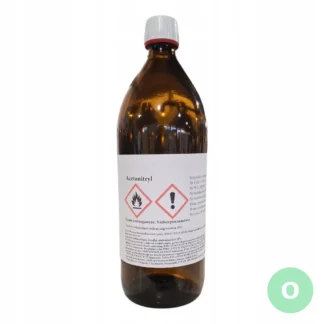
- Safety Data Sheet (SDS): Per REACH Regulation (EC) 1907/2006 — safety, GHS classification (Flammable Liquid Category 2, Acute Toxicity Category 4), and substance labeling information.
- CLP Regulation (EC) 1272/2008: Classification, labeling, and packaging of acetonitrile. Hazard statements: H225 (Highly flammable liquid and vapor), H302+H312+H332 (Harmful if swallowed, in contact with skin, or if inhaled), H319 (Causes serious eye irritation).
- European Pharmacopoeia (Ph. Eur.): Monograph for acetonitrile used in pharmaceutical analysis. Specifies purity tests for HPLC grade.
| Karta charakterystyki chemicznej | |
| Wzór chemiczny | C3H6O |
| Numer CAS | 67-64-1 |
| Numer WE (EC) / EINECS | 200-662-2 |
| Numer UN (ADR) | UN1090 |
| Masa molowa | 58.08 g/mol |
| Nazwa IUPAC (polska) | propan-2-on |
| Nazwa IUPAC (angielska, PubChem) | propan-2-one |
| Nazwy zwyczajowe (polskie) | aceton, dimetyloketon |
| Nazwa łacińska (Farmakopea) | Acetonum |
| Alternatywne nazwy IUPAC | acetone; 2-propanone |
| Synonimy (międzynarodowe, PubChem) | acetone, 2-propanone, propanone, propan-2-one, Dimethyl ketone, Pyroacetic ether, Methyl ketone, Dimethylformaldehyde, beta-Ketopropane, Dimethylketal |
| InChIKey | CSCPPACGZOOCGX-UHFFFAOYSA-N |
| InChI | InChI=1S/C3H6O/c1-3(2)4/h1-2H3 |
| SMILES (kanoniczny) | CC(=O)C |
| PubChem CID | 180 |
| Wikidata QID | Q49546 |
| Nazwa polska (Wikidata) | aceton |
| ChEMBL ID (EBI) | CHEMBL14253 |
| Stan skupienia / opis | Acetone appears as a bezbarwna, przezroczysta ciecz with a sweetish odor. |
| Barwa | bezbarwny volatile liquid |
| Zapach | owocowy odor |
| Gęstość | 0.791 w temp. 20 °C – gęstość niższa od wody (unosi się) |
| Temperatura topnienia | -93.9 °C |
| Temperatura wrzenia | 56.1 °C w temp. 760 mmHg |
| Temperatura zapłonu | -17.8 °C |
| Temperatura samozapłonu | 465 °C |
| Prężność par | 180 mmHg w temp. 20 °C ; 270 mmHg w temp. 30 °C |
| Rozpuszczalność | ≥ 100 mg/mL w temp. 22.2 °C |
| LogP (oktanol/woda) | log Kow = -0.24 |
| Współczynnik załamania | Współczynnik załamania: 1.3588 w temp. 20 °C/D |
| Lepkość | 0.32 cP w temp. 20 °C; 0.27 cP w temp. 40 °C |
| NFPA 704 (skala 0-4) | Zdrowie: 1 | Ogień: 3 | Reaktywność: 0 |
- ✓ PubChem (NIH/NLM)
CID 180— zweryfikowano: Wzór, CAS, IUPAC, InChI, SMILES, masa molowa, GHS - ✓ Wikidata
Q49546— zweryfikowano: wzór, masa molowa, temp. wrzenia, temp. topnienia, gęstość, nazwa polska - ✓ ChEMBL (EBI)
CHEMBL14253— zweryfikowano: InChI, SMILES, masa molowa - ✓ CAS Common Chemistry
CAS 67-64-1— zweryfikowano: oficjalny rejestr CAS Registry Number - ✓ NIST Chemistry WebBook
CAS 67-64-1— zweryfikowano: termodynamika, spektroskopia (NIST USA) - ✓ Wikipedia (EN)
CAS 67-64-1— zweryfikowano: kontekst, popularne nazwy - ✓ Wikipedia (PL)
CAS 67-64-1— zweryfikowano: polskie nazewnictwo, kontekst krajowy - ✓ ChemSpider (RSC)
CAS 67-64-1— zweryfikowano: Royal Society of Chemistry — struktura, syntezy - ✓ GESTIS Substance DB
CAS 67-64-1— zweryfikowano: BHP, toksykologia (DGUV Niemcy) - ✓ ECHA REACH/CLP Inventory
CAS 67-64-1— zweryfikowano: regulacja UE REACH/CLP, klasyfikacja - ✓ PubChem search
CAS 67-64-1— zweryfikowano: wyszukiwanie alternatywne - ✓ ChEBI (EBI)
CSCPPACGZOOCGX-UHFFFAOYSA-N— zweryfikowano: ontologie biologiczne (EBI Wielka Brytania) - ✓ Farmakopea Polska XII
Acetonum— zweryfikowano: URPL — oficjalna farmakopea polska - ✓ GIS (Główny Inspektorat Sanitarny)
regulacje krajowe— zweryfikowano: polskie przepisy sanitarne, REACH wdrożenie
⚠ UWAGA — ODCZYNNIK CHEMICZNY
Acetonitrile High Purity Solvent for Labs (C3H6O) powszechnie znana jako aceton, dimetyloketon to odczynnik chemiczny przeznaczony wyłącznie do zastosowań laboratoryjnych, badawczych i profesjonalnych.
Numer CAS: 67-64-1
Numer WE (EC): 200-662-2
Numer UN (ADR): UN1090
Nazwa IUPAC: propan-2-on
Nazwa łacińska (Farmakopea): Acetonum
NIE NADAJE SIĘ DO SPOŻYCIA przez ludzi ani zwierzęta. Produkt nie jest lekiem, suplementem diety, kosmetykiem ani środkiem spożywczym. Jakiekolwiek inne zastosowanie niż laboratoryjne lub przemysłowe jest niezgodne z przeznaczeniem produktu.
Wymagane środki ochrony osobistej: rękawice ochronne, okulary lub gogle, fartuch laboratoryjny, praca w dobrze wentylowanym pomieszczeniu lub pod wyciągiem chemicznym.
Przed użyciem zapoznaj się z kartą charakterystyki substancji (SDS/MSDS) zgodnie z rozporządzeniem REACH (WE) 1907/2006 oraz CLP (WE) 1272/2008. Sprzedaż wyłącznie do celów technicznych.
Reviews
There are no reviews yet.