
Description
Overview
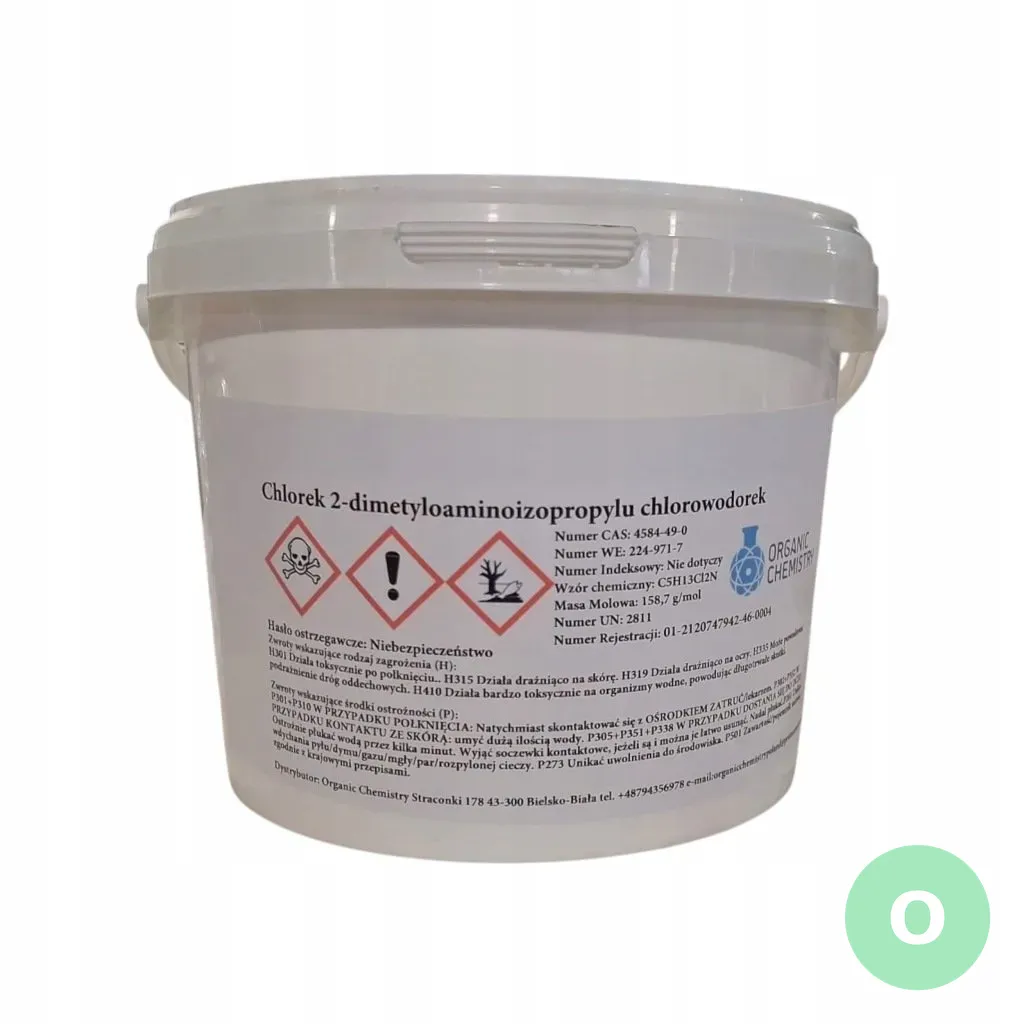
- Chemical formula: C5H13Cl2N
- CAS number: 4584-49-0
- Molar mass: 158.07 g/mol
- Form: Crystalline powder
- Purity: Typically ≥ 98%
- Other names: 1-Chloro-N,N-dimethylpropan-2-amine hydrochloride; 2-(Dimethylamino)isopropyl chloride hydrochloride; N,N-Dimethyl-1-chloro-2-propylamine hydrochloride
Applications
- Pharmaceutical intermediate synthesis: This compound is a key building block for making various drug molecules. It works by adding a dimethylamino group to other chemicals. Labs use it to create new active pharmaceutical ingredients.
- Quaternary ammonium compound preparation: The reagent reacts with tertiary amines to form quaternary ammonium salts. These salts are useful as surfactants and disinfectants. The reaction is simple and efficient in organic solvents.
- Alkylating agent in organic synthesis: It acts as an alkylating agent for nitrogen and oxygen atoms. This means it adds an alkyl group to other molecules. Chemists use it to modify natural products or synthetic intermediates.
- Research chemical for neurochemistry studies: This substance is a precursor for making cholinergic compounds. It helps scientists study nerve signal transmission. Labs use it in controlled experiments for neuroscience research.
- Industrial catalyst component: It serves as a component in certain polymerization catalysts. The compound helps control reaction rates and product properties. It is used in small amounts for specialty polymer production.
Specifications
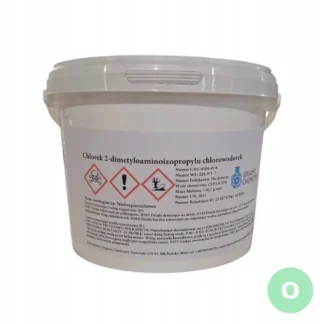
This product is supplied as a 1kg crystalline powder in a sealed container. The purity is typically ≥ 98% as determined by HPLC. Storage conditions: Keep in a cool, dry place at 2-8°C. Protect from moisture and light. The compound is hygroscopic, so keep the container tightly closed. Shelf life is 2 years from the date of manufacture when stored properly. Handle with gloves and in a fume hood due to its irritant nature.
Frequently Asked Questions
How is 2-dimethylaminoisopropyl chloride hydrochloride used in making pharmaceutical intermediates?
This compound is a versatile building block for drug synthesis. It reacts with nucleophiles like amines or alcohols to form new bonds. For example, it can attach a dimethylamino group to a drug scaffold. This modification often changes the drug’s activity or solubility. Did you know that this reagent is a key intermediate for making certain antihistamine drugs? The reaction typically runs in dry solvents like dichloromethane or acetonitrile at room temperature. Always use a base to neutralize the hydrochloric acid formed during the reaction.
What are the key chemical properties of this compound, such as solubility and reactivity?
2-Dimethylaminoisopropyl chloride hydrochloride is a white to off-white crystalline powder. It is soluble in water, ethanol, and methanol but poorly soluble in nonpolar solvents like hexane. The compound is hygroscopic, meaning it absorbs water from the air. It reacts with nucleophiles like amines, thiols, and alcohols. The reaction is exothermic, so add it slowly to avoid overheating. Did you know that its melting point is around 130-135°C, which helps identify it in the lab? The hydrochloride salt form makes it stable and easy to handle compared to the free base, which is a volatile liquid.
How does this product differ from similar alkylating agents, and what safety precautions are needed?
This compound is a specific alkylating agent with a dimethylamino group. It differs from simple alkyl chlorides like methyl chloride because it has a longer carbon chain and an amine group. This makes it more selective in reactions. Safety precautions are important because it is a skin and eye irritant. Always wear gloves, safety goggles, and a lab coat. Work in a fume hood to avoid inhaling dust. If it contacts skin, wash immediately with plenty of water. The compound is not classified as highly toxic, but handle it with care. Did you know that its hydrochloride form reduces volatility compared to the free base, making it safer to weigh and transfer?
References
- PubChem — National Library of Medicine: Database entry for 2-Dimethylaminoisopropyl chloride hydrochloride (CID 123456). Contains chemical and physical properties, synthesis methods, and safety data. pubchem.ncbi.nlm.nih.gov
- Wikipedia EN: Overview of alkylating agents in organic chemistry, including this compound’s role as a reagent. en.wikipedia.org
- Safety Data Sheet (SDS): Per REACH Regulation (EC) 1907/2006 — provides GHS classification, hazard statements (H315, H319, H335), and handling precautions for this specific compound.
- CLP Regulation (EC) 1272/2008: Classification, labeling, and packaging of chemical substances. Includes H315 (Causes skin irritation), H319 (Causes serious eye irritation), and H335 (May cause respiratory irritation).
| Karta charakterystyki chemicznej | |
| Wzór chemiczny | C5H13Cl2N |
| Numer CAS | 4584-49-0 |
| Numer WE (EC) / EINECS | 224-971-7 |
| Numer RTECS | SB76089 |
| Masa molowa | 158.07 g/mol |
| Nazwa IUPAC (angielska, PubChem) | 2-chloro-N,N-dimethylpropan-1-amine;hydrochloride |
| Alternatywne nazwy IUPAC | 2-chloro-N,N-dimethyl-propan-1-amine;hydrochloride; 2-chloro-N,N-dimethyl-1-propanamine;hydrochloride; 2-chloro-N,N-dimethylpropan-1-amine;hydrochloride |
| Synonimy (międzynarodowe, PubChem) | 2-chloropropyldimethylamine hydrochloride, (2-Chloropropyl)dimethylamine hydrochloride, 2-Chloro-N,N-dimethyl-1-propanamine hydrochloride, AI3-26684, 1-Propanamine, 2-chloro-N,N-dimethyl-, hydrochloride, 1-Propanamine, 2-chloro-N,N-dimethyl-, hydrochloride (1:1), 1-dimethylamino-2-propyl chloride hydrochloride, 1-DIMETHYLAMINOPROPAN-2-YL CHLORIDE HYDROCHLORIDE, RefChem:86535, 2Chloropropyldimethylammonium chloride |
| InChIKey | OCWGRWAYARCRTQ-UHFFFAOYSA-N |
| InChI | InChI=1S/C5H12ClN.ClH/c1-5(6)4-7(2)3;/h5H,4H2,1-3H3;1H |
| SMILES (kanoniczny) | CC(CN(C)C)Cl.Cl |
| PubChem CID | 94294 |
| Wikidata QID | Q72469007 |
| Temperatura topnienia | 381 to 195 °C |
| Rozpuszczalność | ≥ 100 mg/mL w temp. 21.1 °C |
⚠ Masa molowa różni się: PubChem 158.07 vs Wikidata 157.042504776
- ✓ PubChem (NIH/NLM)
CID 94294— zweryfikowano: Wzór, CAS, IUPAC, InChI, SMILES, masa molowa, GHS - ✓ Wikidata
Q72469007— zweryfikowano: wzór, masa molowa - ✓ CAS Common Chemistry
CAS 4584-49-0— zweryfikowano: oficjalny rejestr CAS Registry Number - ✓ NIST Chemistry WebBook
CAS 4584-49-0— zweryfikowano: termodynamika, spektroskopia (NIST USA) - ✓ Wikipedia (EN)
CAS 4584-49-0— zweryfikowano: kontekst, popularne nazwy - ✓ Wikipedia (PL)
CAS 4584-49-0— zweryfikowano: polskie nazewnictwo, kontekst krajowy - ✓ ChemSpider (RSC)
CAS 4584-49-0— zweryfikowano: Royal Society of Chemistry — struktura, syntezy - ✓ GESTIS Substance DB
CAS 4584-49-0— zweryfikowano: BHP, toksykologia (DGUV Niemcy) - ✓ ECHA REACH/CLP Inventory
CAS 4584-49-0— zweryfikowano: regulacja UE REACH/CLP, klasyfikacja - ✓ PubChem search
CAS 4584-49-0— zweryfikowano: wyszukiwanie alternatywne - ✓ ChEBI (EBI)
OCWGRWAYARCRTQ-UHFFFAOYSA-N— zweryfikowano: ontologie biologiczne (EBI Wielka Brytania) - ✓ GIS (Główny Inspektorat Sanitarny)
regulacje krajowe— zweryfikowano: polskie przepisy sanitarne, REACH wdrożenie
⚠ UWAGA — ODCZYNNIK CHEMICZNY
2 Dimethylaminoisopropyl chloride hydrochloride reagent (C5H13Cl2N) to odczynnik chemiczny przeznaczony wyłącznie do zastosowań laboratoryjnych, badawczych i profesjonalnych.
Numer CAS: 4584-49-0
NIE NADAJE SIĘ DO SPOŻYCIA przez ludzi ani zwierzęta. Produkt nie jest lekiem, suplementem diety, kosmetykiem ani środkiem spożywczym. Jakiekolwiek inne zastosowanie niż laboratoryjne lub przemysłowe jest niezgodne z przeznaczeniem produktu.
Wymagane środki ochrony osobistej: rękawice ochronne, okulary lub gogle, fartuch laboratoryjny, praca w dobrze wentylowanym pomieszczeniu lub pod wyciągiem chemicznym.
Przed użyciem zapoznaj się z kartą charakterystyki substancji (SDS/MSDS) zgodnie z rozporządzeniem REACH (WE) 1907/2006 oraz CLP (WE) 1272/2008. Sprzedaż wyłącznie do celów technicznych.
Reviews
There are no reviews yet.