
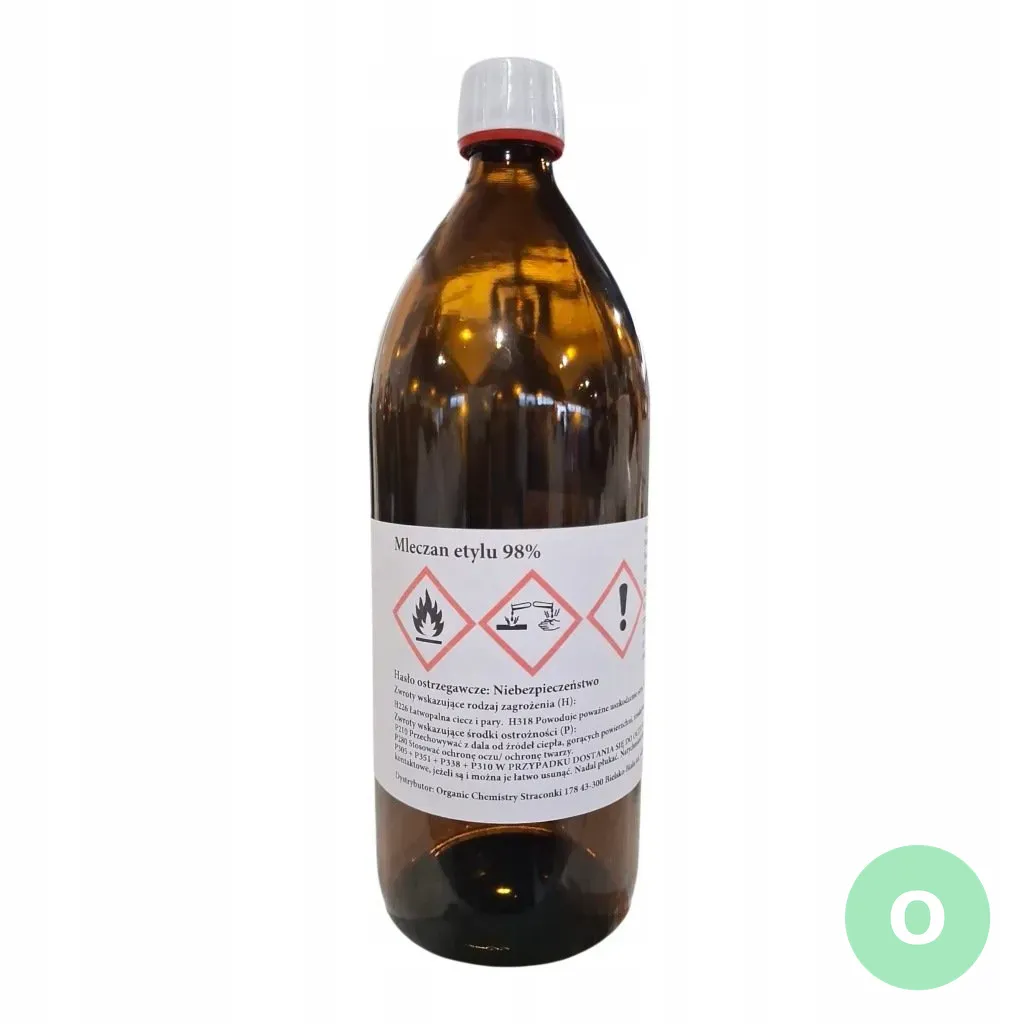
Description
Overview
- Chemical formula: C5H10O3
- CAS number: 97-64-3
- Molar mass: 118.13 g/mol
- Form: liquid
- Purity: 98%
- Other names: ethyl 2-hydroxypropanoate, lactic acid ethyl ester, ethyl DL-lactate
History and origin of the substance
Ethyl lactate comes from lactic acid. Lactic acid is a natural compound. It forms in sour milk and fermented foods. Chemists first made ethyl lactate in the 1800s. They reacted lactic acid with ethanol. This reaction is called esterification. It produces a sweet-smelling ester.
Early uses were in food flavorings. The solvent was safe and mild. Later, industry saw its power. It could dissolve many substances. It was also biodegradable. This made it a green alternative. Old solvents like acetone or toluene were toxic. Ethyl lactate was not.
Today, production is large scale. It uses renewable sources like corn. The process is efficient and clean. Ethyl lactate is now a key solvent. It works in labs, factories, and cleaning products. Its popularity grows each year.
Applications
- Chemical synthesis: Ethyl lactate is a solvent for reactions. It helps dissolve reactants and catalysts. It is common in esterification and polymerization. Its low toxicity is a big plus.
- Cleaning agent: It removes grease, ink, and oils. It works on electronics and metal parts. It leaves no harmful residue. It is safe for workers and the environment.
- Coatings and paints: It is a solvent in varnishes and lacquers. It helps the paint spread evenly. It evaporates at a steady rate. This gives a smooth finish.
- Pharmaceutical intermediate: It is a building block for drugs. It helps make other chemicals. Its purity is important for medicine production. It is used in controlled environments.
- Flavor and fragrance industry: It carries flavors in food. It is a solvent for natural extracts. It is safe for consumption in small amounts. It is used in perfumes too.
Specifications
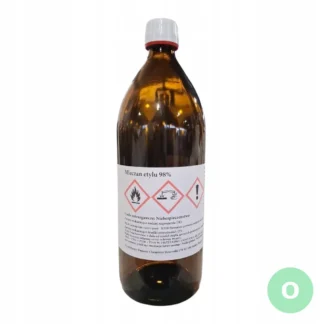
Purity: 98% by GC. Density: 1.03 g/mL at 20°C. Boiling point: 154°C. Flash point: 46°C. Refractive index: 1.412. Solubility: miscible with water, ethanol, and ether. Storage: keep in a cool, dry place. Avoid heat and open flames. Container: 1L HDPE bottle with secure cap.
Frequently Asked Questions
How do I use ethyl lactate for cleaning circuit boards?
Apply a small amount to a lint-free cloth. Wipe the board gently. The solvent dissolves flux and oils. It evaporates quickly without residue. For stubborn spots, use a soft brush. Always work in a ventilated area. Did you know ethyl lactate is used to clean NASA spacecraft parts?
Is ethyl lactate soluble in water?
Yes, it mixes with water in all ratios. This is rare for an ester. Most esters are not water-soluble. Ethyl lactate has a hydroxyl group. This group makes it polar. So it dissolves in water and organic solvents. Did you know this property makes it a great co-solvent for many reactions?
How is ethyl lactate different from ethyl acetate?
Ethyl lactate is safer and greener. It is biodegradable and non-toxic. Ethyl acetate is more volatile and flammable. Ethyl lactate has a higher boiling point. It evaporates slower. This gives more working time. Ethyl lactate also smells sweeter. For safety, ethyl lactate is preferred in closed spaces.
References
- PubChem — National Library of Medicine: Database entry for ethyl lactate (CID 7344). Contains physical properties, safety data, and toxicity. pubchem.ncbi.nlm.nih.gov
- Wikipedia EN: Overview of ethyl lactate applications, production, and environmental impact. en.wikipedia.org
- Safety Data Sheet (SDS): Per REACH Regulation (EC) 1907/2006 — includes GHS classification: flammable liquid (Category 3), H226, P210. Safe handling and storage instructions.
- CLP Regulation (EC) 1272/2008: Classification: Flam. Liq. 3, H226. Precautionary statements: P210, P233, P240, P241, P242, P243, P280, P303+P361+P353, P370+P378, P403+P235, P501.
| Karta charakterystyki chemicznej | |
| Wzór chemiczny | C5H10O3 |
| Numer CAS | 97-64-3 |
| Numer WE (EC) / EINECS | 202-598-0 |
| Numer UN (ADR) | UN1192 |
| Masa molowa | 118.13 g/mol |
| Nazwa IUPAC (angielska, PubChem) | ethyl 2-hydroxypropanoate |
| Alternatywne nazwy IUPAC | 2-hydroxypropanoic acid ethyl ester; ethyl 2-oxidanylpropanoate; 2-hydroxypropionic acid ethyl ester |
| Synonimy (międzynarodowe, PubChem) | ETHYL LACTATE, Ethyl 2-hydroxypropanoate, Solactol, Actylol, Acytol, Ethyl 2-hydroxypropionate, Propanoic acid, 2-hydroxy-, ethyl ester, Lactate d’ethyle, 2-Hydroxypropanoic acid ethyl ester, Ethyl alpha-hydroxypropionate |
| InChIKey | LZCLXQDLBQLTDK-UHFFFAOYSA-N |
| InChI | InChI=1S/C5H10O3/c1-3-8-5(7)4(2)6/h4,6H,3H2,1-2H3 |
| SMILES (kanoniczny) | CCOC(=O)C(C)O |
| PubChem CID | 7344 |
| Wikidata QID | Q415418 |
| Nazwa polska (Wikidata) | DL-mleczan etylu |
| ChEMBL ID (EBI) | CHEMBL3186323 |
| Stan skupienia / opis | Ethyl lactate appears as a bezbarwna, przezroczysta ciecz with a mild odor. |
| Barwa | bezbarwna ciecz |
| Zapach | Buttery odor |
| Gęstość | 1.03 w temp. 20 °C – gęstość wyższa od wody (opada) |
| Temperatura topnienia | -26 °C |
| Temperatura wrzenia | 153.9 °C w temp. 760 mmHg |
| Temperatura zapłonu | 46.1 °C |
| Temperatura samozapłonu | 400 °C |
| Prężność par | 3.75 [mmHg] |
| Rozpuszczalność | miesza się z wodą |
| Współczynnik załamania | Współczynnik załamania: 1.4124 w temp. 20 °C/D |
| NFPA 704 (skala 0-4) | Zdrowie: 3 | Ogień: 2 | Reaktywność: 0 |
- ✓ PubChem (NIH/NLM)
CID 7344— zweryfikowano: Wzór, CAS, IUPAC, InChI, SMILES, masa molowa, GHS - ✓ Wikidata
Q415418— zweryfikowano: wzór, masa molowa, temp. wrzenia, temp. topnienia, gęstość, nazwa polska - ✓ ChEMBL (EBI)
CHEMBL3186323— zweryfikowano: InChI, SMILES, masa molowa - ✓ CAS Common Chemistry
CAS 97-64-3— zweryfikowano: oficjalny rejestr CAS Registry Number - ✓ NIST Chemistry WebBook
CAS 97-64-3— zweryfikowano: termodynamika, spektroskopia (NIST USA) - ✓ Wikipedia (EN)
CAS 97-64-3— zweryfikowano: kontekst, popularne nazwy - ✓ Wikipedia (PL)
CAS 97-64-3— zweryfikowano: polskie nazewnictwo, kontekst krajowy - ✓ ChemSpider (RSC)
CAS 97-64-3— zweryfikowano: Royal Society of Chemistry — struktura, syntezy - ✓ GESTIS Substance DB
CAS 97-64-3— zweryfikowano: BHP, toksykologia (DGUV Niemcy) - ✓ ECHA REACH/CLP Inventory
CAS 97-64-3— zweryfikowano: regulacja UE REACH/CLP, klasyfikacja - ✓ PubChem search
CAS 97-64-3— zweryfikowano: wyszukiwanie alternatywne - ✓ ChEBI (EBI)
LZCLXQDLBQLTDK-UHFFFAOYSA-N— zweryfikowano: ontologie biologiczne (EBI Wielka Brytania) - ✓ GIS (Główny Inspektorat Sanitarny)
regulacje krajowe— zweryfikowano: polskie przepisy sanitarne, REACH wdrożenie
⚠ UWAGA — ODCZYNNIK CHEMICZNY
Ethyl lactate solvent for labs and industry (C5H10O3) to odczynnik chemiczny przeznaczony wyłącznie do zastosowań laboratoryjnych, badawczych i profesjonalnych.
Numer CAS: 97-64-3
NIE NADAJE SIĘ DO SPOŻYCIA przez ludzi ani zwierzęta. Produkt nie jest lekiem, suplementem diety, kosmetykiem ani środkiem spożywczym. Jakiekolwiek inne zastosowanie niż laboratoryjne lub przemysłowe jest niezgodne z przeznaczeniem produktu.
Wymagane środki ochrony osobistej: rękawice ochronne, okulary lub gogle, fartuch laboratoryjny, praca w dobrze wentylowanym pomieszczeniu lub pod wyciągiem chemicznym.
Przed użyciem zapoznaj się z kartą charakterystyki substancji (SDS/MSDS) zgodnie z rozporządzeniem REACH (WE) 1907/2006 oraz CLP (WE) 1272/2008. Sprzedaż wyłącznie do celów technicznych.
Reviews
There are no reviews yet.