
Description
Overview
- Chemical formula: C3H7NO
- CAS number: 68-12-2
- Molar mass: 73.09 g/mol
- Form: clear liquid
- Purity: 99.9%
- Other names: DMF, N,N-dimethylformamide, dimethylformamide, DMFA
History and origin of the substance
N,N-Dimethylformamide was first made in 1893 by French chemist Albert Verley. He reacted dimethylamine with formic acid. This gave a new liquid with strong dissolving power. For many years, DMF stayed a lab curiosity.
In the 1950s, industry found DMF very useful. It could dissolve polyacrylonitrile, a tough polymer. This made DMF key for making synthetic fibers like acrylic. Today, DMF is made in huge amounts worldwide. Over 400,000 tons are produced each year.
DMF is now a standard solvent in many fields. It works in pharmaceutical labs, polymer plants, and chemical factories. Its ability to dissolve both polar and nonpolar substances is rare. This makes DMF a top choice for complex reactions.
Applications
- Polymer dissolution: DMF dissolves polyacrylonitrile, polyurethane, and PVC. It is used to spin fibers or cast films. The solvent is removed later.
- Chemical synthesis: DMF is a common medium for reactions like the Vilsmeier-Haack formylation. It helps make aldehydes from aromatic compounds. This is key in drug making.
- Peptide coupling: In peptide synthesis, DMF dissolves amino acids and reagents. It keeps the reaction mixture clear. This improves yield and purity.
- Gas chromatography: DMF is a stationary phase in some GC columns. It separates light hydrocarbons and gases. This is used in petrochemical analysis.
- Paint and coating removal: DMF strips tough paints and varnishes. It swells the polymer layer. Then the coating can be scraped off easily.
Specifications
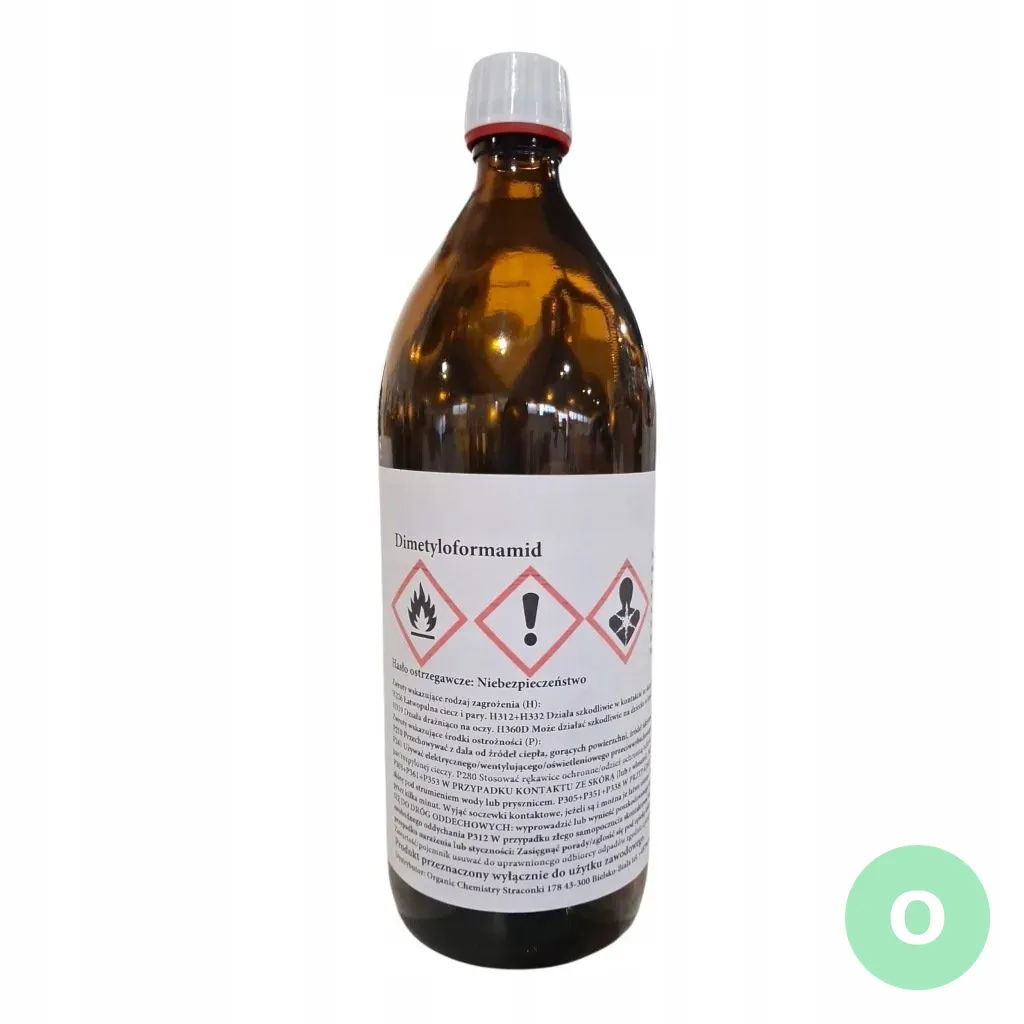
This product is 99.9% pure N,N-Dimethylformamide. Volume: 1 liter. Appearance: clear, colorless liquid. Boiling point: 153°C. Density: 0.944 g/mL at 25°C. Flash point: 58°C (closed cup). Water content: less than 0.05%. Storage: keep in a cool, dry place away from heat and open flames. Use in a fume hood. Avoid contact with skin and eyes.
Frequently Asked Questions
How do I use DMF to dissolve polyacrylonitrile for fiber spinning?
First, weigh the polyacrylonitrile powder. Add it slowly to DMF while stirring. Use a ratio of 15-20 grams of polymer per 100 mL of DMF. Heat the mixture to 60-80°C for 1 hour. The polymer will fully dissolve. Filter the solution to remove any particles. Then spin the fibers by extruding the solution through a spinneret into a water bath. The DMF washes out, leaving solid fibers.
Why is DMF called a polar aprotic solvent and what does that mean?
A polar aprotic solvent has a positive and negative end (polar) but no hydrogen atom bonded to oxygen or nitrogen (aprotic). This means it cannot donate a hydrogen bond. DMF has a strong dipole moment of 3.86 Debye. This lets it dissolve ionic compounds and polar molecules. But it does not interfere with reactions that need a bare anion. Did you know that DMF has a high dielectric constant of 36.7? This makes it excellent for stabilizing charged intermediates in organic reactions.
How does DMF differ from dimethyl sulfoxide (DMSO) in safety and handling?
Both DMF and DMSO are polar aprotic solvents. But DMSO has a higher boiling point (189°C) and a stronger smell. DMF is less viscous and easier to handle. For safety, DMF is classified as a Category 2 reproductive toxicant. DMSO is not. DMF can be absorbed through the skin, so gloves are mandatory. DMSO also penetrates skin but is less toxic. Always use DMF in a fume hood. Never heat it above 150°C as it can decompose to toxic gases.
References
- PubChem — National Library of Medicine: Contains full physicochemical data for DMF (CID 6228). Includes safety, toxicity, and spectroscopic information. pubchem.ncbi.nlm.nih.gov
- Wikipedia EN: Overview of DMF production, uses, and safety. en.wikipedia.org
- Safety Data Sheet (SDS) for DMF: Per REACH Regulation (EC) 1907/2006 — includes GHS classification, hazard statements (H312, H319, H332, H360D), and first aid measures.
- CLP Regulation (EC) 1272/2008: DMF is classified as a Category 2 reproductive toxicant. H360D: May damage the unborn child. P201: Obtain special instructions before use.
- European Pharmacopoeia (Ph. Eur.): Monograph for dimethylformamide as a solvent in pharmaceutical analysis. Specifies purity tests and limits for water and impurities.
| Karta charakterystyki chemicznej | |
| Wzór chemiczny | C3H7NO |
| Numer CAS | 68-12-2 |
| Numer WE (EC) / EINECS | 200-679-5 |
| Numer UN (ADR) | UN2265 |
| Masa molowa | 73.09 g/mol |
| Nazwa IUPAC (polska) | N,N-dimetyloformamid |
| Nazwa IUPAC (angielska, PubChem) | N,N-dimethylformamide |
| Nazwy zwyczajowe (polskie) | DMF |
| Alternatywne nazwy IUPAC | N,N-dimethylformamide; N,N-dimethylmethanamide |
| Synonimy (międzynarodowe, PubChem) | N,N-DIMETHYLFORMAMIDE, Dimethylformamide, Dimethyl formamide, N-Formyldimethylamine, Formamide, N,N-dimethyl-, Dimethylformamid, DMFA, N,N-Dimethyl formamide, Formyldimethylamine, Dimetilformamide |
| InChIKey | ZMXDDKWLCZADIW-UHFFFAOYSA-N |
| InChI | InChI=1S/C3H7NO/c1-4(2)3-5/h3H,1-2H3 |
| SMILES (kanoniczny) | CN(C)C=O |
| PubChem CID | 6228 |
| Wikidata QID | Q409298 |
| Nazwa polska (Wikidata) | dimetyloformamid |
| ChEMBL ID (EBI) | CHEMBL268291 |
| Stan skupienia / opis | N,n-dimethylformamide appears as a water-white liquid with a słaby fishy odor. |
| Barwa | bezbarwny to very slightly żółta ciecz |
| Zapach | Fishy odor |
| Gęstość | 0.95 w temp. 20 °C – gęstość niższa od wody (unosi się) |
| Temperatura topnienia | -61.1 °C |
| Temperatura wrzenia | 300 to 156.1 °C w temp. 760 mmHg |
| Temperatura zapłonu | 67.2 °C |
| Temperatura samozapłonu | 445 °C |
| Prężność par | 3.7 mmHg w temp. 25 °C ; 2.7 mmHg w temp. 20 °C |
| Rozpuszczalność | ≥ 100 mg/mL w temp. 22.2 °C |
| LogP (oktanol/woda) | -1.01 |
| Współczynnik załamania | Współczynnik załamania: 1.42083 w temp. 25 °C/D |
| Lepkość | 0.802 cP w temp. 25 °C |
| NFPA 704 (skala 0-4) | Zdrowie: 2 | Ogień: 2 | Reaktywność: 0 |
- ✓ PubChem (NIH/NLM)
CID 6228— zweryfikowano: Wzór, CAS, IUPAC, InChI, SMILES, masa molowa, GHS - ✓ Wikidata
Q409298— zweryfikowano: wzór, masa molowa, temp. wrzenia, temp. topnienia, gęstość, nazwa polska - ✓ ChEMBL (EBI)
CHEMBL268291— zweryfikowano: InChI, SMILES, masa molowa - ✓ CAS Common Chemistry
CAS 68-12-2— zweryfikowano: oficjalny rejestr CAS Registry Number - ✓ NIST Chemistry WebBook
CAS 68-12-2— zweryfikowano: termodynamika, spektroskopia (NIST USA) - ✓ Wikipedia (EN)
CAS 68-12-2— zweryfikowano: kontekst, popularne nazwy - ✓ Wikipedia (PL)
CAS 68-12-2— zweryfikowano: polskie nazewnictwo, kontekst krajowy - ✓ ChemSpider (RSC)
CAS 68-12-2— zweryfikowano: Royal Society of Chemistry — struktura, syntezy - ✓ GESTIS Substance DB
CAS 68-12-2— zweryfikowano: BHP, toksykologia (DGUV Niemcy) - ✓ ECHA REACH/CLP Inventory
CAS 68-12-2— zweryfikowano: regulacja UE REACH/CLP, klasyfikacja - ✓ PubChem search
CAS 68-12-2— zweryfikowano: wyszukiwanie alternatywne - ✓ ChEBI (EBI)
ZMXDDKWLCZADIW-UHFFFAOYSA-N— zweryfikowano: ontologie biologiczne (EBI Wielka Brytania) - ✓ GIS (Główny Inspektorat Sanitarny)
regulacje krajowe— zweryfikowano: polskie przepisy sanitarne, REACH wdrożenie
⚠ UWAGA — ODCZYNNIK CHEMICZNY
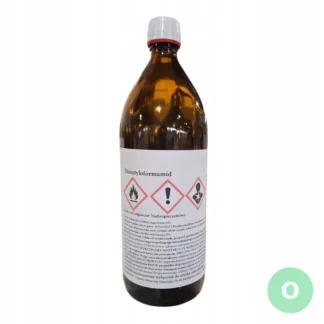
N,N Dimethylformamide DMF Pure Solvent (C3H7NO) powszechnie znana jako DMF to odczynnik chemiczny przeznaczony wyłącznie do zastosowań laboratoryjnych, badawczych i profesjonalnych.
Numer CAS: 68-12-2
Numer WE (EC): 200-679-5
Numer UN (ADR): UN2265
Nazwa IUPAC: N,N-dimetyloformamid
NIE NADAJE SIĘ DO SPOŻYCIA przez ludzi ani zwierzęta. Produkt nie jest lekiem, suplementem diety, kosmetykiem ani środkiem spożywczym. Jakiekolwiek inne zastosowanie niż laboratoryjne lub przemysłowe jest niezgodne z przeznaczeniem produktu.
Wymagane środki ochrony osobistej: rękawice ochronne, okulary lub gogle, fartuch laboratoryjny, praca w dobrze wentylowanym pomieszczeniu lub pod wyciągiem chemicznym.
Przed użyciem zapoznaj się z kartą charakterystyki substancji (SDS/MSDS) zgodnie z rozporządzeniem REACH (WE) 1907/2006 oraz CLP (WE) 1272/2008. Sprzedaż wyłącznie do celów technicznych.
Reviews
There are no reviews yet.