
Description
Overview
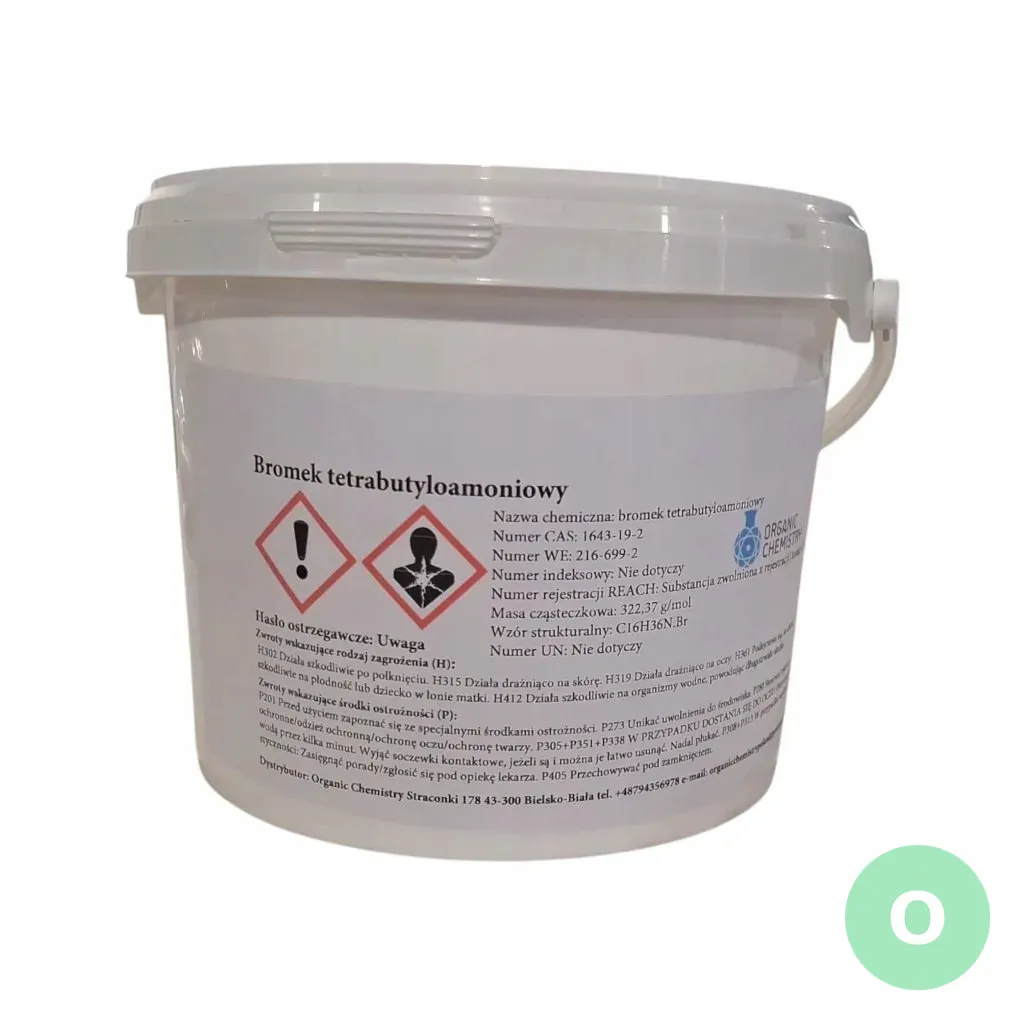
- Chemical formula: C16H36BrN
- CAS number: 1643-19-2
- Molar mass: 322.37 g/mol
- Form: White to off-white crystalline powder
- Purity: 99%+
- Other names: Tetrabutylammonium bromide, TBAB, N,N,N-Tributyl-1-butanaminium bromide
Applications
- Phase transfer catalysis: TBAB moves ions from water into organic solvents. This speeds up reactions like alkylations and oxidations by 10-100 times.
- Organic synthesis: Used to make esters, ethers, and nitriles. It works well with strong bases like sodium hydroxide.
- Polymer chemistry: TBAB helps in making special polymers. It controls chain length and reduces side reactions.
- Electrochemistry: Acts as a supporting electrolyte in non-aqueous solutions. It keeps current stable during voltammetry tests.
- Analytical chemistry: Used in ion-pair chromatography to separate charged molecules. It improves peak shape and resolution.
Specifications
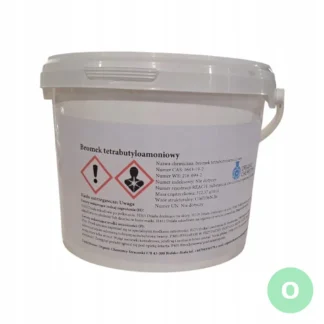
Weight: 1 kg per bottle. Storage: Keep in a cool, dry place below 25°C. Avoid moisture and light. Shelf life: 2 years when sealed. Melting point: 103-106°C. Solubility: Soluble in water (600 g/L at 20°C) and in many organic solvents like acetone and ethanol. pH of 1% solution: 5.0-7.0. Loss on drying: less than 0.5%.
Frequently Asked Questions
How do I use TBAB as a phase transfer catalyst in a typical alkylation reaction?
Add TBAB at 1-5 mole percent relative to your substrate. Dissolve it in the organic phase first. Then add your aqueous base solution. Stir the mixture vigorously at room temperature or slightly heated. The reaction usually finishes in 30 minutes to 2 hours. Did you know that TBAB can increase reaction yields by over 90% compared to without catalyst?
What is the solubility of TBAB in different solvents, and why does it matter?
TBAB dissolves well in water, acetone, ethanol, and chloroform. It does not dissolve in diethyl ether or hexane. This property lets it move between water and organic layers during reactions. Did you know that TBAB’s solubility in water is about 600 g/L, which is much higher than many other quaternary ammonium salts?
How is TBAB different from tetrabutylammonium chloride (TBAC) for safety and handling?
TBAB is less hygroscopic than TBAC, so it absorbs less moisture from air. This makes it easier to weigh and store. However, both are irritants to skin and eyes. TBAB also has a higher melting point (103°C) compared to TBAC (83°C). Always wear gloves and goggles when handling either compound.
References
- PubChem — National Library of Medicine: Comprehensive database of physicochemical properties of tetrabutylammonium bromide (CID 74236). Contains spectroscopic, toxicological data, and interaction information. pubchem.ncbi.nlm.nih.gov
- Wikipedia EN: Overview of applications, production methods, and properties of TBAB as a phase transfer catalyst. en.wikipedia.org
- Safety Data Sheet (SDS): Per REACH Regulation (EC) 1907/2006 — safety, GHS classification (Warning, H315, H319, H335), and substance labeling information.
- CLP Regulation (EC) 1272/2008: Classification, labeling, and packaging of chemical substances. Includes H315 (skin irritation), H319 (eye irritation), H335 (respiratory irritation).
| Karta charakterystyki chemicznej | |
| Wzór chemiczny | CCl4 |
| Numer CAS | 56-23-5 |
| Numer WE (EC) / EINECS | 200-262-8 |
| Numer UN (ADR) | UN1846 |
| Masa molowa | 153.8 g/mol |
| Nazwa IUPAC (polska) | tetrachlorometan |
| Nazwa IUPAC (angielska, PubChem) | tetrachloromethane |
| Nazwy zwyczajowe (polskie) | czterochlorek węgla, tetra (hist.) |
| Alternatywne nazwy IUPAC | carbon tetrachloride; tetrakis(chloranyl)methane |
| Synonimy (międzynarodowe, PubChem) | CARBON TETRACHLORIDE, Tetrachloromethane, Perchloromethane, Tetrasol, Benzinoform, Necatorine, Tetrafinol, Vermoestricid, Carbona, Univerm |
| InChIKey | VZGDMQKNWNREIO-UHFFFAOYSA-N |
| InChI | InChI=1S/CCl4/c2-1(3,4)5 |
| SMILES (kanoniczny) | C(Cl)(Cl)(Cl)Cl |
| PubChem CID | 5943 |
| Wikidata QID | Q225045 |
| Nazwa polska (Wikidata) | tetrachlorometan |
| ChEMBL ID (EBI) | CHEMBL44814 |
| Stan skupienia / opis | Carbon tetrachloride appears as a bezbarwna, przezroczysta ciecz with a charakterystyczny odor. |
| Barwa | Liquid |
| Zapach | słodki |
| Gęstość | 1.59 w temp. 20 °C – gęstość wyższa od wody (opada) |
| Temperatura topnienia | -22.8 °C |
| Temperatura wrzenia | 76.7 °C w temp. 760 mmHg |
| Temperatura samozapłonu | Not łatwopalny |
| Prężność par | 91 mmHg w temp. 20 °C ; 113 mmHg w temp. 25 °C |
| Rozpuszczalność | < 1 mg/mL w temp. 21.1 °C |
| LogP (oktanol/woda) | log Kow = 2.83 |
| Współczynnik załamania | Współczynnik załamania: 1.4601 w temp. 20 °C/D |
| Lepkość | 2.03X10⁻³ Pa.s w temp. 250.00 K |
| NFPA 704 (skala 0-4) | Zdrowie: 3 | Ogień: 0 | Reaktywność: 0 |
- ✓ PubChem (NIH/NLM)
CID 5943— zweryfikowano: Wzór, CAS, IUPAC, InChI, SMILES, masa molowa, GHS - ✓ Wikidata
Q225045— zweryfikowano: wzór, masa molowa, temp. wrzenia, temp. topnienia, gęstość, nazwa polska - ✓ ChEMBL (EBI)
CHEMBL44814— zweryfikowano: InChI, SMILES, masa molowa - ✓ CAS Common Chemistry
CAS 56-23-5— zweryfikowano: oficjalny rejestr CAS Registry Number - ✓ NIST Chemistry WebBook
CAS 56-23-5— zweryfikowano: termodynamika, spektroskopia (NIST USA) - ✓ Wikipedia (EN)
CAS 56-23-5— zweryfikowano: kontekst, popularne nazwy - ✓ Wikipedia (PL)
CAS 56-23-5— zweryfikowano: polskie nazewnictwo, kontekst krajowy - ✓ ChemSpider (RSC)
CAS 56-23-5— zweryfikowano: Royal Society of Chemistry — struktura, syntezy - ✓ GESTIS Substance DB
CAS 56-23-5— zweryfikowano: BHP, toksykologia (DGUV Niemcy) - ✓ ECHA REACH/CLP Inventory
CAS 56-23-5— zweryfikowano: regulacja UE REACH/CLP, klasyfikacja - ✓ PubChem search
CAS 56-23-5— zweryfikowano: wyszukiwanie alternatywne - ✓ ChEBI (EBI)
VZGDMQKNWNREIO-UHFFFAOYSA-N— zweryfikowano: ontologie biologiczne (EBI Wielka Brytania) - ✓ GIS (Główny Inspektorat Sanitarny)
regulacje krajowe— zweryfikowano: polskie przepisy sanitarne, REACH wdrożenie
⚠ UWAGA — ODCZYNNIK CHEMICZNY
Tetrabutylammonium Bromide TBAB Phase Transfer Catalyst (CCl4) powszechnie znana jako czterochlorek węgla, tetra (hist.) to odczynnik chemiczny przeznaczony wyłącznie do zastosowań laboratoryjnych, badawczych i profesjonalnych.
Numer CAS: 56-23-5
Numer WE (EC): 200-262-8
Numer UN (ADR): UN1846
Nazwa IUPAC: tetrachlorometan
NIE NADAJE SIĘ DO SPOŻYCIA przez ludzi ani zwierzęta. Produkt nie jest lekiem, suplementem diety, kosmetykiem ani środkiem spożywczym. Jakiekolwiek inne zastosowanie niż laboratoryjne lub przemysłowe jest niezgodne z przeznaczeniem produktu.
Wymagane środki ochrony osobistej: rękawice ochronne, okulary lub gogle, fartuch laboratoryjny, praca w dobrze wentylowanym pomieszczeniu lub pod wyciągiem chemicznym.
Przed użyciem zapoznaj się z kartą charakterystyki substancji (SDS/MSDS) zgodnie z rozporządzeniem REACH (WE) 1907/2006 oraz CLP (WE) 1272/2008. Sprzedaż wyłącznie do celów technicznych.
Reviews
There are no reviews yet.