
Description
Overview
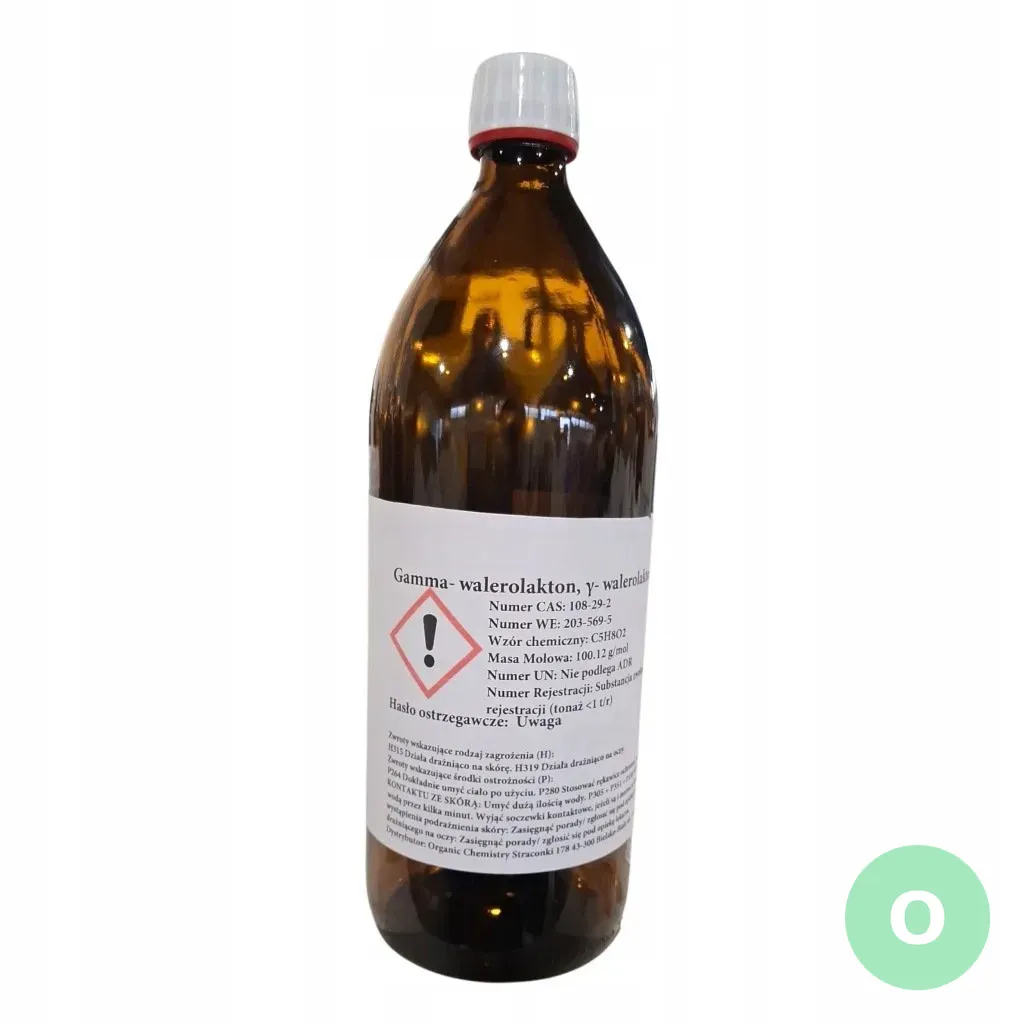
- Chemical formula: C5H8O2
- CAS number: 108-29-2
- Molar mass: 100.12 g/mol
- Form: Liquid
- Purity: 99.9%
- Other names: 4-Hydroxypentanoic acid lactone, 4-Valerolactone, GVL
Applications
- Green solvent for coatings: GVL dissolves many resins and polymers. It works well in paint and varnish formulas. It replaces toxic solvents like NMP or toluene.
- Chemical intermediate: Scientists use GVL to make other chemicals. It helps produce nylon precursors and fuel additives. It is a key step in biomass conversion.
- Cleaning agent: GVL removes grease and oils from metal parts. It works in electronics and precision cleaning. It is safer than many chlorinated solvents.
- Extraction solvent: GVL extracts natural products from plants. It pulls out flavors, fragrances, and active compounds. It is used in food and cosmetic labs.
- Electrolyte additive: GVL improves battery performance. It helps lithium-ion batteries work better at low temperatures. It also increases battery safety.
Specifications
This product is a clear, colorless liquid. It has a mild, sweet odor. Its boiling point is 207-208°C. Its flash point is 96°C (closed cup). Density is about 1.05 g/mL at 20°C. It is miscible with water and most organic solvents. Store in a cool, dry place away from heat. Keep the container tightly sealed. Do not expose to open flames. Shelf life is at least 2 years when stored properly.
Frequently Asked Questions
How do I use gamma-valerolactone as a solvent in a lab?
Gamma-valerolactone works as a direct solvent for many reactions. You can mix it with water or other solvents. It dissolves polar and non-polar compounds well. For cleaning, apply it undiluted or as a 10-20% solution in water. It evaporates slowly, so you may need heat to dry surfaces. Did you know that GVL is made from renewable biomass like corn stalks? This makes it a green chemistry choice.
What are the chemical properties of gamma-valerolactone?
Gamma-valerolactone is a cyclic ester. It is stable under normal conditions. It reacts with strong bases to open the ring. This forms 4-hydroxypentanoic acid salts. Its pH in water is near neutral. It does not corrode most metals. Did you know that GVL has a high boiling point of 207°C? This makes it useful for high-temperature reactions without evaporating too fast.
How is gamma-valerolactone different from other lactones like butyrolactone?
Gamma-valerolactone has one more carbon atom than gamma-butyrolactone (GBL). This gives it a higher boiling point and lower toxicity. GVL is less volatile and has a milder odor. It is also more biodegradable. GBL is often used in industrial cleaning, but GVL is safer for the environment. When working with GVL, use gloves and goggles. It is not a strong irritant, but avoid skin contact and ingestion.
References
- PubChem — National Library of Medicine: Comprehensive database of physicochemical properties of gamma-valerolactone (CID 7921). Contains spectroscopic, toxicological data, and interaction information. pubchem.ncbi.nlm.nih.gov
- Wikipedia EN: Overview of applications, production methods, and properties of gamma-valerolactone. en.wikipedia.org
- Safety Data Sheet (SDS): Per REACH Regulation (EC) 1907/2006 — safety, GHS classification, and substance labeling information. GHS07 (irritant), H319 (causes serious eye irritation).
- CLP Regulation (EC) 1272/2008: Classification, labeling, and packaging of chemical substances. H319 (eye irritation), P305+P351+P338 (if in eyes, rinse with water).
- Green Chemistry Journal: Research on gamma-valerolactone as a sustainable solvent from biomass. Shows its low toxicity and environmental benefits.
| Karta charakterystyki chemicznej | |
| Wzór chemiczny | C5H8O2 |
| Numer CAS | 108-29-2 |
| Numer WE (EC) / EINECS | 203-569-5 |
| Numer RTECS | FV04206 |
| Masa molowa | 100.12 g/mol |
| Nazwa IUPAC (angielska, PubChem) | 5-methyloxolan-2-one |
| Alternatywne nazwy IUPAC | 5-methyltetrahydrofuran-2-one; 5-methyl-2-oxolanone |
| Synonimy (międzynarodowe, PubChem) | gamma-Valerolactone, 4-Pentanolide, 4-Valerolactone, gamma-Pentalactone, 4-Hydroxypentanoic acid lactone, 4-Hydroxyvaleric acid lactone, 2(3H)-Furanone, dihydro-5-methyl-, 4-Methyl-gamma-butyrolactone, gamma-Methyl-gamma-butyrolactone, 4-Methyl-4-hydroxybutanoic acid lactone |
| InChIKey | GAEKPEKOJKCEMS-UHFFFAOYSA-N |
| InChI | InChI=1S/C5H8O2/c1-4-2-3-5(6)7-4/h4H,2-3H2,1H3 |
| SMILES (kanoniczny) | CC1CCC(=O)O1 |
| PubChem CID | 7921 |
| Wikidata QID | Q845530 |
| Nazwa polska (Wikidata) | γ-walerolakton |
| ChEMBL ID (EBI) | CHEMBL195593 |
| Gęstość | 1.057 w temp. 20 °C – gęstość wyższa od wody (opada) |
| Temperatura topnienia | -31.1 °C |
| Temperatura wrzenia | 405 to 207.8 °C w temp. 760 mmHg |
| Temperatura zapłonu | 81.1 °C |
| Prężność par | 0.5 mmHg w temp. 28.9 °C ; 3.5 mmHg w temp. 51.1 °C; 11.5 mmHg w temp. 72.8 °C |
| Rozpuszczalność | ≥ 100 mg/mL w temp. 22.2 °C |
| LogP (oktanol/woda) | -0.270 |
| Współczynnik załamania | 1.431-1.434 |
- ✓ PubChem (NIH/NLM)
CID 7921— zweryfikowano: Wzór, CAS, IUPAC, InChI, SMILES, masa molowa, GHS - ✓ Wikidata
Q845530— zweryfikowano: wzór, masa molowa, temp. topnienia, nazwa polska - ✓ ChEMBL (EBI)
CHEMBL195593— zweryfikowano: InChI, SMILES, masa molowa - ✓ CAS Common Chemistry
CAS 108-29-2— zweryfikowano: oficjalny rejestr CAS Registry Number - ✓ NIST Chemistry WebBook
CAS 108-29-2— zweryfikowano: termodynamika, spektroskopia (NIST USA) - ✓ Wikipedia (EN)
CAS 108-29-2— zweryfikowano: kontekst, popularne nazwy - ✓ Wikipedia (PL)
CAS 108-29-2— zweryfikowano: polskie nazewnictwo, kontekst krajowy - ✓ ChemSpider (RSC)
CAS 108-29-2— zweryfikowano: Royal Society of Chemistry — struktura, syntezy - ✓ GESTIS Substance DB
CAS 108-29-2— zweryfikowano: BHP, toksykologia (DGUV Niemcy) - ✓ ECHA REACH/CLP Inventory
CAS 108-29-2— zweryfikowano: regulacja UE REACH/CLP, klasyfikacja - ✓ PubChem search
CAS 108-29-2— zweryfikowano: wyszukiwanie alternatywne - ✓ ChEBI (EBI)
GAEKPEKOJKCEMS-UHFFFAOYSA-N— zweryfikowano: ontologie biologiczne (EBI Wielka Brytania) - ✓ GIS (Główny Inspektorat Sanitarny)
regulacje krajowe— zweryfikowano: polskie przepisy sanitarne, REACH wdrożenie
⚠ UWAGA — ODCZYNNIK CHEMICZNY
Gamma Valerolactone Solvent for Labs and Industry (C5H8O2) to odczynnik chemiczny przeznaczony wyłącznie do zastosowań laboratoryjnych, badawczych i profesjonalnych.
Numer CAS: 108-29-2
NIE NADAJE SIĘ DO SPOŻYCIA przez ludzi ani zwierzęta. Produkt nie jest lekiem, suplementem diety, kosmetykiem ani środkiem spożywczym. Jakiekolwiek inne zastosowanie niż laboratoryjne lub przemysłowe jest niezgodne z przeznaczeniem produktu.
Wymagane środki ochrony osobistej: rękawice ochronne, okulary lub gogle, fartuch laboratoryjny, praca w dobrze wentylowanym pomieszczeniu lub pod wyciągiem chemicznym.
Przed użyciem zapoznaj się z kartą charakterystyki substancji (SDS/MSDS) zgodnie z rozporządzeniem REACH (WE) 1907/2006 oraz CLP (WE) 1272/2008. Sprzedaż wyłącznie do celów technicznych.
Reviews
There are no reviews yet.