
Description
Overview
- Chemical formula: C7H8O2
- CAS number: 90-05-1
- Molar mass: 124.14 g/mol
- Form: liquid
- Purity: 99.9%
- Other names: 2-methoxyphenol, o-methoxyphenol, pyrocatechol monomethyl ether
History and origin of the substance
Guaiacol was first isolated in the 19th century. Chemists found it in guaiacum resin. This resin comes from the guaiacum tree. The tree grows in South America. Early uses were for medicinal purposes. But today we focus on its chemical properties.
In the 20th century, guaiacol became important for industry. It is a key building block for many synthetic compounds. One major use is in making vanillin. Vanillin is the main flavor in vanilla. Guaiacol is also used to make other flavors and fragrances. This makes it a valuable reagent.
Modern production is mostly synthetic. It is made from catechol and methanol. The process is efficient and yields high purity. This 99.9% pure liquid is perfect for precise lab work. It has a strong, smoky odor. It is a clear to pale yellow liquid at room temperature.
Applications
- Chemical synthesis: Guaiacol is a starting material for vanillin. Vanillin is used in food flavoring. The reaction uses glyoxylic acid. This is a key industrial process.
- Laboratory reagent: It is used in tests for lignin. Lignin is a plant polymer. The test turns blue-green. This helps identify wood pulp quality.
- Flavor and fragrance industry: Guaiacol adds smoky notes. It is used in meat flavors. It also appears in some perfumes. Only small amounts are needed.
- Pharmaceutical intermediate: It helps make other drugs. For example, it is used in cough medicines. It acts as an expectorant. This is a common use in medicine.
- Analytical chemistry: Guaiacol is a standard for gas chromatography. It helps calibrate instruments. It is also a reference compound. This ensures accurate measurements.
Specifications
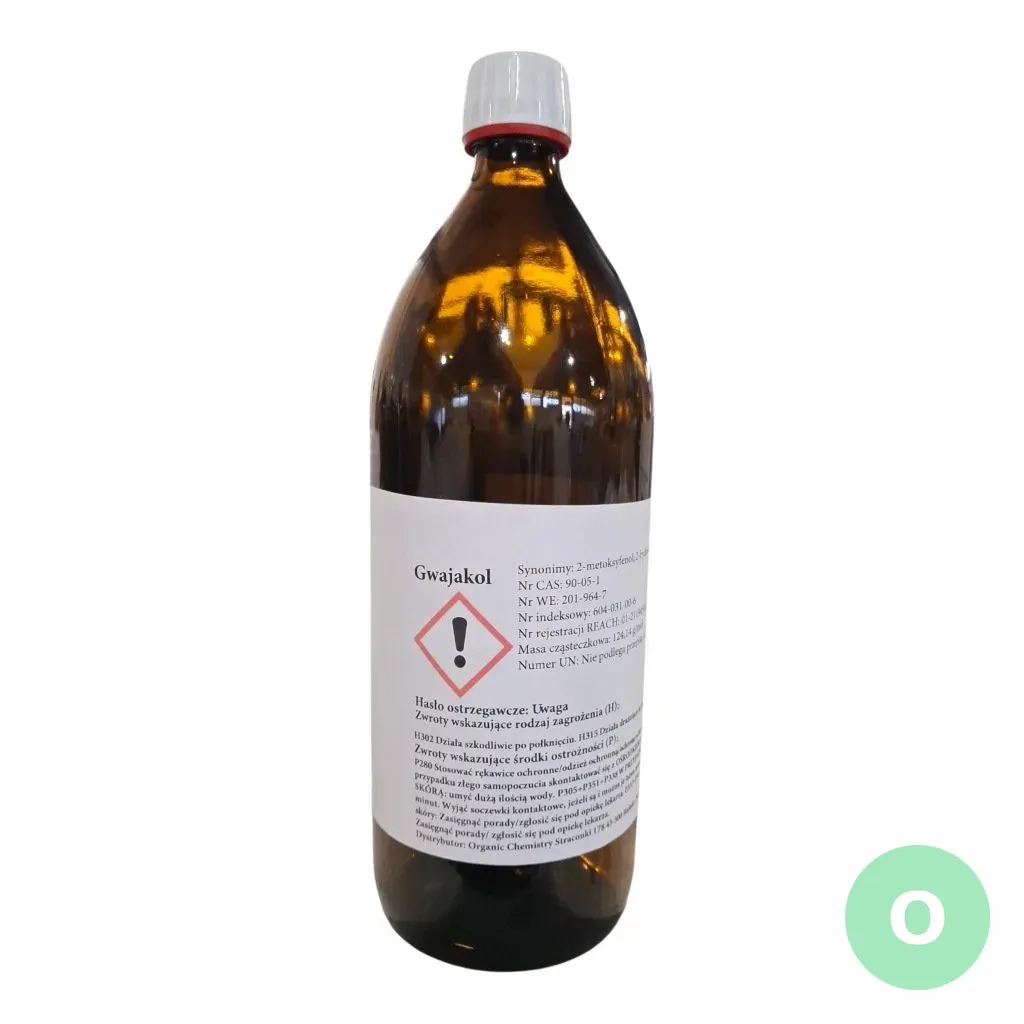
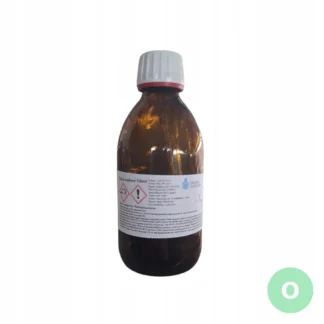
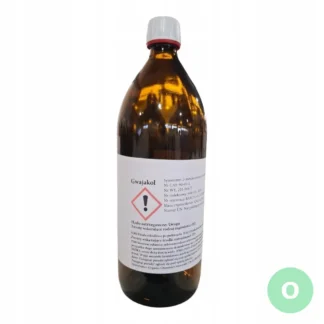
Technical parameters: Purity is 99.9% by GC. Density is 1.112 g/mL at 25°C. Boiling point is 205°C. Flash point is 82°C. Refractive index is 1.542-1.544. Storage: Keep in a cool, dry place. Avoid light. Use in a fume hood. Container: 1 liter bottle. Weight: approximately 1.1 kg.
Frequently Asked Questions
How is guaiacol used in making vanillin?
Guaiacol is reacted with glyoxylic acid. This creates a new molecule. Then it is oxidized to vanillin. The yield is high. This process is used in factories. Did you know that most natural vanilla flavor is actually made from guaiacol? It is cheaper than real vanilla beans.
What are the physical properties of guaiacol?
Guaiacol is a liquid at room temperature. It has a melting point of 28°C. So it can solidify in cold rooms. It is slightly soluble in water. But it mixes well with alcohol and ether. Its smell is strong and smoky. Did you know that guaiacol is a phenol? It has a hydroxyl group attached to a benzene ring.
How is guaiacol different from other phenols like catechol?
Guaiacol has one methoxy group. Catechol has two hydroxyl groups. This changes their reactivity. Guaiacol is less polar. It dissolves better in organic solvents. Safety: Guaiacol is an irritant. It can cause burns. Always wear gloves and goggles. Use it only in a lab with good ventilation.
References
- PubChem — National Library of Medicine: Comprehensive database of physicochemical properties of this substance (CID 460). Contains spectroscopic, toxicological data, and interaction information. pubchem.ncbi.nlm.nih.gov
- Wikipedia EN: Overview of applications, production methods, and properties. en.wikipedia.org
- Safety Data Sheet (SDS): Per REACH Regulation (EC) 1907/2006 — safety, GHS classification, and substance labeling information.
- CLP Regulation (EC) 1272/2008: Classification, labeling, and packaging of chemical substances. H315: Causes skin irritation. H319: Causes serious eye irritation. H335: May cause respiratory irritation.
| Karta charakterystyki chemicznej | |
| Wzór chemiczny | C7H8O2 |
| Numer CAS | 90-05-1 |
| Numer WE (EC) / EINECS | 201-964-7 |
| Numer RTECS | DB11359 |
| Masa molowa | 124.14 g/mol |
| Nazwa IUPAC (angielska, PubChem) | 2-methoxyphenol |
| Alternatywne nazwy IUPAC | guaiacol |
| Synonimy (międzynarodowe, PubChem) | guaiacol, 2-Methoxyphenol, o-Methoxyphenol, 2-Hydroxyanisole, o-Guaiacol, Guaiastil, Pyroguaiac acid, o-Hydroxyanisole, Phenol, 2-methoxy-, Anastil |
| InChIKey | LHGVFZTZFXWLCP-UHFFFAOYSA-N |
| InChI | InChI=1S/C7H8O2/c1-9-7-5-3-2-4-6(7)8/h2-5,8H,1H3 |
| SMILES (kanoniczny) | COC1=CC=CC=C1O |
| PubChem CID | 460 |
| Wikidata QID | Q412403 |
| Nazwa polska (Wikidata) | Gwajakol |
| ChEMBL ID (EBI) | CHEMBL13766 |
| Zapach | Aromatic odor |
| Gęstość | 1.13 w temp. 21.4 °C – gęstość wyższa od wody (opada) |
| Temperatura topnienia | SOLIDIFIES w temp. 28 °C |
| Temperatura wrzenia | 399 to 206.1 °C w temp. 760 mmHg |
| Temperatura zapłonu | 82.2 °C |
| Prężność par | 5 mmHg w temp. 78.9 °C |
| Rozpuszczalność | słabo rozpuszczalny |
| LogP (oktanol/woda) | log Kow = 1.32 |
| Współczynnik załamania | Współczynnik załamania: 1.5429 w temp. 20 °C/D |
- ✓ PubChem (NIH/NLM)
CID 460— zweryfikowano: Wzór, CAS, IUPAC, InChI, SMILES, masa molowa, GHS - ✓ Wikidata
Q412403— zweryfikowano: wzór, masa molowa, temp. topnienia, nazwa polska - ✓ ChEMBL (EBI)
CHEMBL13766— zweryfikowano: InChI, SMILES, masa molowa - ✓ CAS Common Chemistry
CAS 90-05-1— zweryfikowano: oficjalny rejestr CAS Registry Number - ✓ NIST Chemistry WebBook
CAS 90-05-1— zweryfikowano: termodynamika, spektroskopia (NIST USA) - ✓ Wikipedia (EN)
CAS 90-05-1— zweryfikowano: kontekst, popularne nazwy - ✓ Wikipedia (PL)
CAS 90-05-1— zweryfikowano: polskie nazewnictwo, kontekst krajowy - ✓ ChemSpider (RSC)
CAS 90-05-1— zweryfikowano: Royal Society of Chemistry — struktura, syntezy - ✓ GESTIS Substance DB
CAS 90-05-1— zweryfikowano: BHP, toksykologia (DGUV Niemcy) - ✓ ECHA REACH/CLP Inventory
CAS 90-05-1— zweryfikowano: regulacja UE REACH/CLP, klasyfikacja - ✓ PubChem search
CAS 90-05-1— zweryfikowano: wyszukiwanie alternatywne - ✓ ChEBI (EBI)
LHGVFZTZFXWLCP-UHFFFAOYSA-N— zweryfikowano: ontologie biologiczne (EBI Wielka Brytania) - ✓ GIS (Główny Inspektorat Sanitarny)
regulacje krajowe— zweryfikowano: polskie przepisy sanitarne, REACH wdrożenie
⚠ UWAGA — ODCZYNNIK CHEMICZNY
Guaiacol 2 Methoxyphenol Pure Liquid Reagent (C7H8O2) to odczynnik chemiczny przeznaczony wyłącznie do zastosowań laboratoryjnych, badawczych i profesjonalnych.
Numer CAS: 90-05-1
NIE NADAJE SIĘ DO SPOŻYCIA przez ludzi ani zwierzęta. Produkt nie jest lekiem, suplementem diety, kosmetykiem ani środkiem spożywczym. Jakiekolwiek inne zastosowanie niż laboratoryjne lub przemysłowe jest niezgodne z przeznaczeniem produktu.
Wymagane środki ochrony osobistej: rękawice ochronne, okulary lub gogle, fartuch laboratoryjny, praca w dobrze wentylowanym pomieszczeniu lub pod wyciągiem chemicznym.
Przed użyciem zapoznaj się z kartą charakterystyki substancji (SDS/MSDS) zgodnie z rozporządzeniem REACH (WE) 1907/2006 oraz CLP (WE) 1272/2008. Sprzedaż wyłącznie do celów technicznych.
Reviews
There are no reviews yet.